
Every morning, Jules Hofele wakes up to the sound of roosters crowing and the sight of rugged red mountain peaks above vast green fields.
For the 24-year-old German backpacker, life at Mt Little Station in the Flinders Ranges is very different to life back home.
“It’s beautiful and peaceful here and every day is different.”
In March, Hofele took a job cleaning accommodation at a train station, but it didn’t meet her expectations.
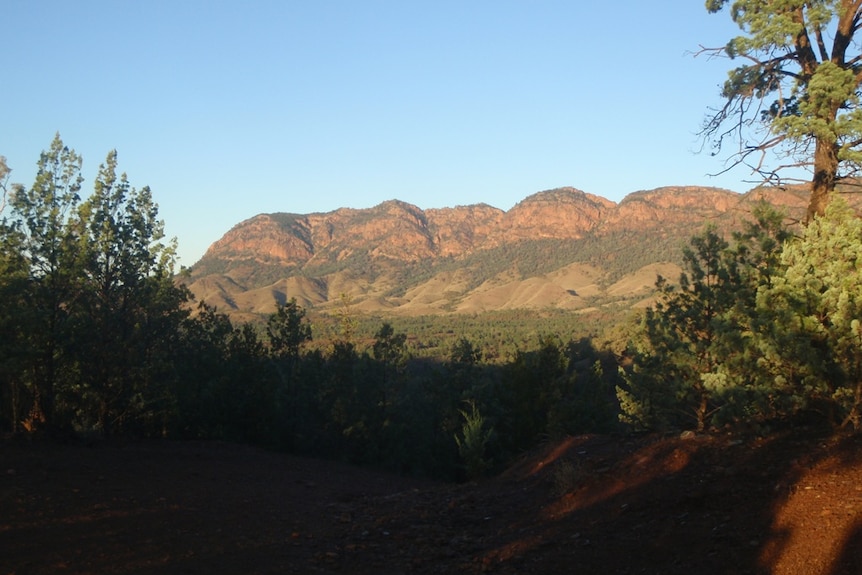
Mt Little Station is located in the Flinders Ranges, SA’s largest mountain range. (Provided by: Ron Fredericks)
”[My job] It depends on whether we have enough tourists, which we don’t have at the moment,” she said.
”When I got here, everyone just said wait until Easter, wait until school is out. [for things to pick up] …But basically I’m just waiting.”
The station has a capacity of 400 people and is usually full at this time of year. Currently, about half of the reservations are filled.
“People can’t afford to travel here. They also worry about being stranded if they run out of fuel,” station owner Kelly Zadow said.
Zadow had hired another backpacker on a Working Holiday Maker (WHM) visa, but had to let him go after the first week.
Backpackers can accumulate the required 88 days of specific work through multiple eligible employers.
According to the latest government data, there are 235,600 WHMs in Australia.
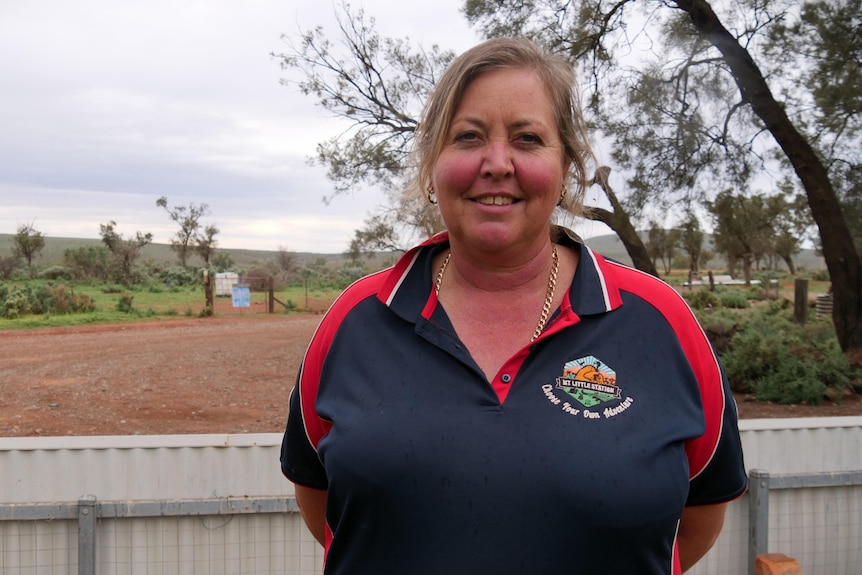
Kelly Zadow has owned Mount Little Station for eight years. (ABC North and West SA: Jenae Madden)
“It’s hard to get enough work for one worker, let alone two,” she says.
Hofele admitted she was “nervous” about being the only backpacker at the station.
“I saw girls from other years [social media] And they had so much fun together,” she said.
“It’s nice to have people around your age to talk to and explore with.”
In the hinterland, the layoff situation is even more dire.
Oodnadatta is located 700 kilometers northwest of Mt Little Station, on the edge of the Simpson Desert in SA’s far north.
Pink Roadhouse owner Joe Calvert said he had to cut seven of his nine seasonal workers because his income was down 76% compared to last year.
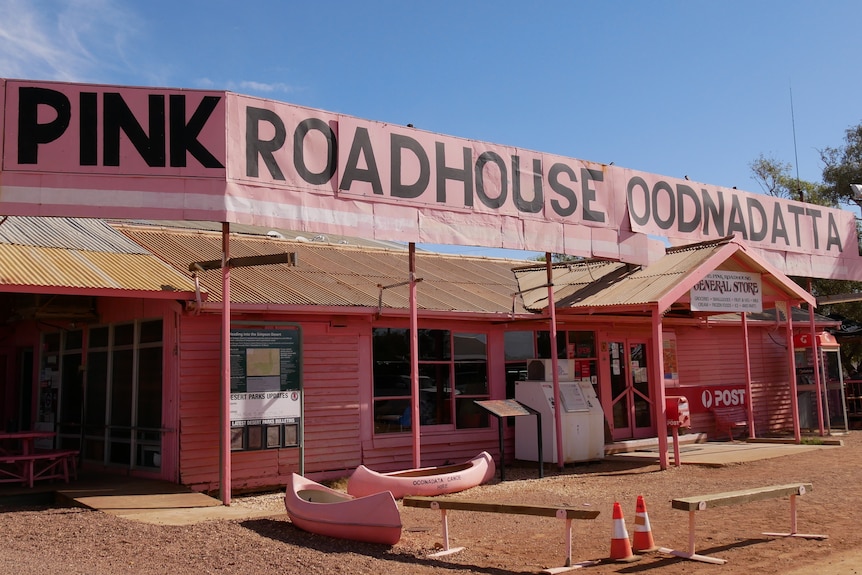
Pink Roadhouse in Oodnadatta is an important tourist attraction. (ABC North & West: Isabella Carbone)
“As soon as the war started and fuel prices went up, we canceled the staff that were scheduled to come. Then, as time went on, it became clear that we couldn’t support the staff we already had.”
Calvert said.
Irish backpacker Mark Wickham, who has been working at Pink Roadhouse since March, is one of the employees who was made redundant.
“It’s a shame because I was planning on staying for at least three months,” he said.
”I would love to stay in South Australia or regionally, but it all depends on finding work.”
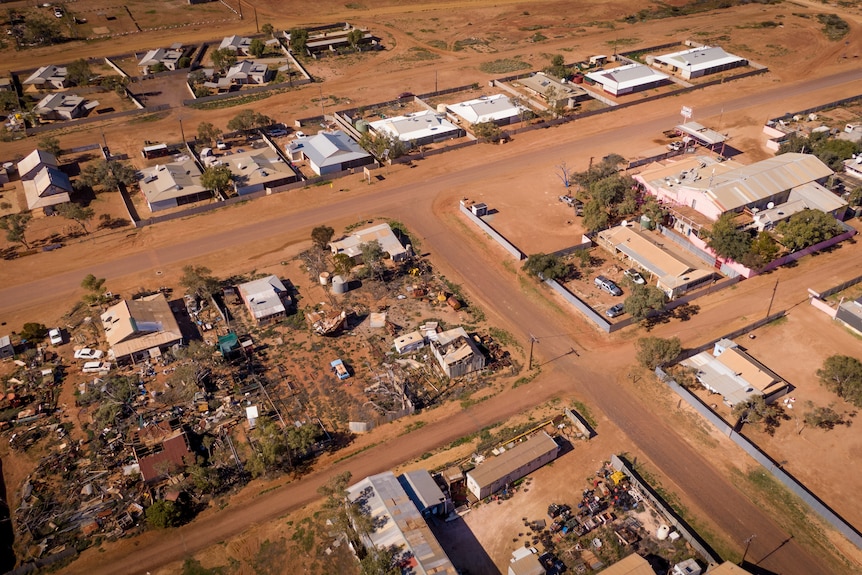
The 2021 census of Oodnadatta recorded a population of 102 people, with 17 families living in the town. (ABC News: That Chorley)
Since being made redundant, Mr. Wickham has searched in vain for work in the outback.
“I feel that [other backpackers] It takes a lot of distance and cost to get here now, so we’re staying a little bit more around the city. ”
To qualify for 88 days of local work on a WHM visa, hospitality workers can work anywhere in South Australia except metropolitan Adelaide.
Wickham said he is heading south in hopes of receiving applications from service industries in densely populated areas.

Located in the far north of South Australia, Oodnadatta’s economy relies on tourism. (ABC News: Isabella Carbone)
backpacker economy
Tourism scholar Donna James said backpackers were making a “tremendous” contribution to Australia’s remote regions.
Dr. James viewed WHMs as “high-revenue tourists” who spend differently than short-term visitors.

Dr Donna James is a Lecturer in Cultural Heritage and Tourism at the University of Western Sydney. (Supplied)
“Unlike other tourists who just fly out to a country for a few days, they [backpackers] They often stay for weeks or even months,” she said.
“So they may be relying on long-term stays, buying groceries at local stores, and using local services while in the area.”
“The majority of their income goes back into the local economy.”
She said that in addition to the economic benefits backpackers bring to small communities, there are also social benefits.
“They bring a vibrant, young energy to these areas.”
Dr James said remote towns struggling to fill their sports teams were turning to backpackers to get numbers to attend local competitions.
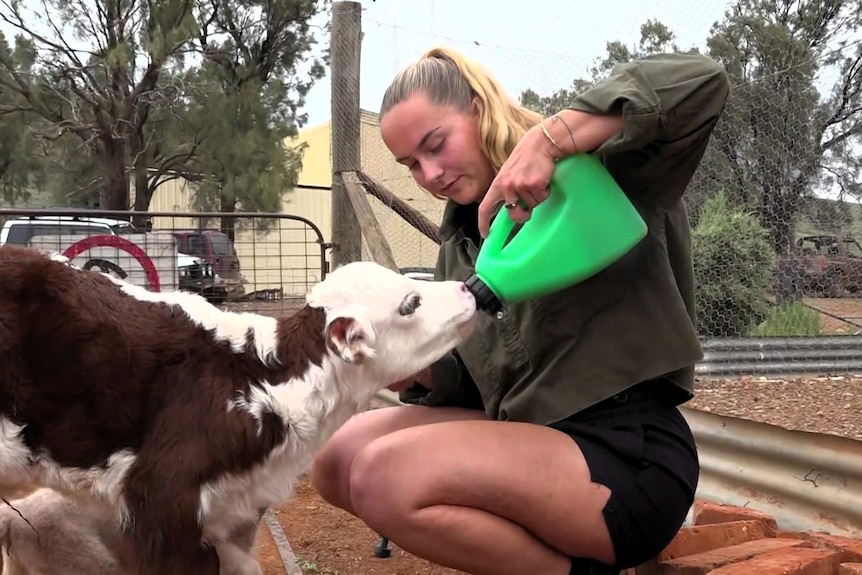
Jules named Mount Little Station’s newest calf Milka, after the German chocolate brand. (ABC North and West SA: Jenae Madden)
“When these young people come in, they’re often very engaged, very energetic, very motivated to get out and meet people,” she said.
“I think there’s a perception that backpackers take jobs away from local people and are a threat, but backpackers are essential to these remote areas.”
Jules Hofele was hoping tourism would recover so she could continue working at Mount Little Station.
“The last group of backpackers stayed much longer than planned. I love it here so I could imagine that happening.”
she said.
Loading…
#Fuel #costs #hit #tourism #costing #jobs #hinterland