
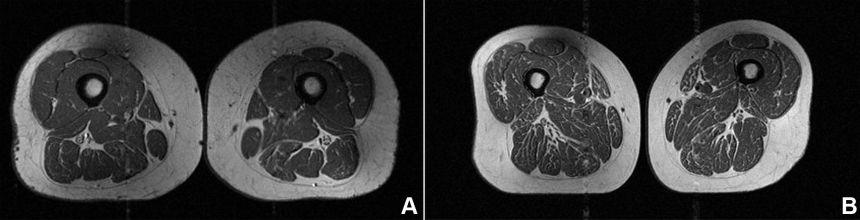
The image resembles a slice of well-marbled meat, reminiscent of a fine steak with abundant streaks of finely textured fat. But it’s not dinner. This is an MRI scan of the thigh of a 62-year-old woman who consumed 87% of her annual calories from ultra-processed foods.
“This participant’s diet consisted primarily of cold cereal, chocolate candy or candy bars, and regular soft drinks or bottled sweet drinks,” said Dr. Zehra Akkaya, a researcher and consultant in the Clinical and Translational Musculoskeletal Imaging Research Group at the University of California, San Francisco.
Akkaya, lead author of a new study analyzing how ultra-processed foods affect intramuscular fat in people at risk for knee osteoporosis, said hidden streaks of fat between and within muscle fibers could indicate a serious health problem.
Ultra-processed foods have been linked to weight gain and the development of chronic diseases such as obesity, cancer, cardiovascular disease, type 2 diabetes, and depression. Such food can even shorten lifespan.
According to the Centers for Disease Control and Prevention, more than 50% of the calories consumed by American adults come from ultra-processed foods. In children, that number rises to 62%.
A 61-year-old woman in the study also had fat marbling in her thigh muscles, but it wasn’t as severe. Approximately 29% of her annual diet consisted of ultra-processed foods.
“These people, who were scanned at a time when they had no signs of knee osteoarthritis, were particularly concerned because they were already showing decreased muscle quality,” Akkaya said.
Relationship between fatty muscles and knee pain
Fat cells act as a growth impediment, weakening muscles and preventing proper regeneration of muscle fibers. Muscle weakness is a major cause of knee osteoarthritis, the most common joint disease affecting approximately 375 million people worldwide. Once known as a disease of the elderly, one study found that more than half of new infections were in people under the age of 55, likely due to the dramatic increase in obesity worldwide.
“The thigh muscles are critical to the stability of the knee joint, and loss of their strength and tone can increase mechanical stress on the joint. This strain is amplified by excess body weight, especially in obese people,” Akkaya said. “Our group and others have previously established a strong association between muscle strength, quality, and function and the development of knee osteoarthritis.”
Dr. Miriam Bredera, a radiologist and director of the Institute for Clinical and Translational Sciences at NYU Langone Health in New York City, said finding intramuscular fat in the thighs means other muscles in the body are also affected.
“This is a systemic process, so it’s not just the thighs. If you look at other muscles, like the calves, shoulders, abdomen, it looks similar,” said Bredera, who was not involved in the study.
Decreased muscle quality due to fat infiltration means the muscles aren’t as strong, she says, which is a predictor of future health problems.
“If you are hospitalized, your hospital stay will be longer due to muscle weakness.If you undergo surgery, “We have done a lot of research in cancer patients,” Bredera said. This is not good as it increases surgical complications and tumor recurrence. ”
The new study, published Tuesday in the journal Radiology, analyzed MRI scans of 615 people participating in the Osteoarthritis Initiative, a nationwide study aimed at learning how to prevent and treat knee osteoarthritis. No one in this study showed signs of knee osteoarthritis. The average age of the participants was 60 years, and their body mass index (BMI) was 27.
When calculating a person’s BMI, a weight between 25 and 29.9 is overweight, a weight between 30 and 34.9 is obese, a weight between 35 and 39.9 is class 2 obesity, and a weight over 40 is “severe” or class 3 obesity.
A 61-year-old woman who ate a diet consisting of 29.5% ultra-processed foods (A in the image below) had a slightly higher BMI of 32.6 and a much lower activity score than a woman with a BMI of 31.8 (B in the image below) whose diet consisted of 87.1% ultra-processed foods. However, women with higher ultra-processing scores had dramatically more marbled thigh fat.
Calorie intake doesn’t seem to be the issue, said study lead author Thomas Link, Ph.D., professor in the Department of Radiology and Biomedical Imaging and chief of the musculoskeletal radiology department at the University of California, San Francisco.
“Throughout the study, we found that the more ultra-processed foods you ate, the more intramuscular fat you had in your thighs, regardless of your caloric intake,” he said.
Although the study could not show that ultra-processed foods caused muscle fat marbling, “there was a strong association,” Bredera said. “But we don’t know how much ultra-processed food you have to eat for this to happen to your muscles. If you stop eating those foods, will your symptoms go away?”
“What we know is that if you have fat infiltration in your muscles, you can definitely improve the quality of your muscles if you start exercising and eating a healthy diet,” she says. “It’s much easier for younger people than for older people, but it can be done.”
How to lose fat, gain muscle and protect your joints
Link advised against relying on ball sports such as basketball or tennis: “High-impact exercise is not recommended as it can destroy the knee joint. Low-impact exercise is best.”
Exercises like wall squats, step-up exercise boxes, standing leg lifts, inner thigh lifts, and calf and heel raises target the muscles around your knees (quadriceps, hamstrings, glutes, and calves), experts say.
“In one of our studies, we found that the elliptical trainer was very beneficial, perhaps more beneficial than other low-impact exercises. And of course, strength training with weights is very helpful,” Link said.
When it comes to diet, Bredera says it’s best to eat a balanced diet of home-cooked “real food.”
“Muscles need enough protein, but turning to ultra-processed protein bars and supplements is not the answer,” she said. “Many of these protein bars are loaded with sugar and aren’t very healthy, contrary to what they advertise on the label.”
You can further reduce ultra-processed foods in your life by taking the following steps.
1) Read and compare product labels to choose less processed alternatives. For example, swap flavored yogurt for plain yogurt with added fruit.
2) What you include is just as important as what you exclude. Look at what you can add to your diet, such as whole grains, vegetables, legumes, legumes, and fresh, frozen, or soaked canned fruit.
3) Be careful about what you drink. Sugary drinks have no nutritional value. Replace them with water.
4) When eating out, go to local restaurants and cafes instead of fast food chains. Local restaurants are less likely to produce ultra-processed foods.
#Ultraprocessed #food #turns #human #thighs #marbled #steaks #CNN